It Started With Voice Actors. It Doesn’t End There.
From voice to training data, and why creators need to define usage before it happens
They started with voice actors.
At RaptorLockIP.com, the initial focus was straightforward. Voice actors are one of the clearest cases where identity and output are the same thing. A voice is not just part of the work. It is the work.
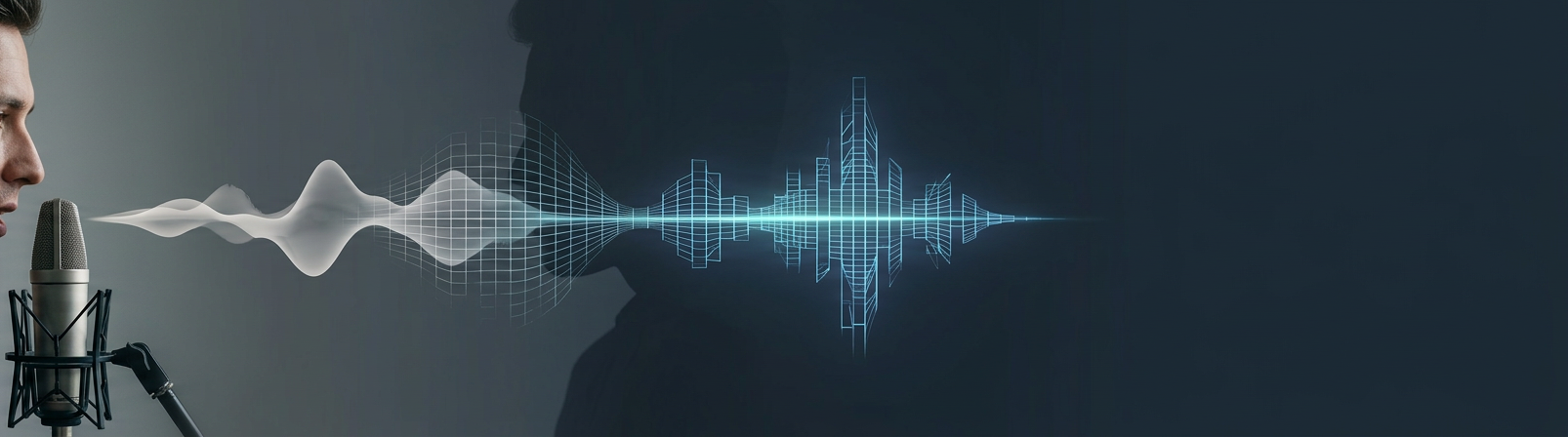
The exposure was immediate. Voice actors produce hours of clean, high-quality recordings. That material is public, structured, and consistent. It is exactly the kind of input modern systems can learn from and reproduce.
That raised a deeper question.
What happens when that voice is not only recreated, but used as input for systems that can generate new output, with or without the original creator’s involvement?
The First Layer: Voice
A voice actor can spend years developing a recognizable sound.
That sound can now generate:
- new performances
- new lines
- new messages
All without the original speaker.
At that point, the boundary between authentic and synthetic output becomes unclear.
Voice actors are getting hit hardest and are in reactive mode. It becomes a cycle of claims and counterclaims. He said, she said.
By the time a dispute begins, the voice has already been used.
The problem is not just misuse. It is that nothing was clearly established beforehand.
The Bridge: Podcasters
As the RaptorLockIP team worked through this, a second group came into focus.
Podcasters.
They sit in a unique position. Like voice actors, their voices are central. Like influencers, their audience is built on trust and continuity.
A listener does not just hear information. They recognize a person.
That makes podcasts a natural bridge.
- long form audio
- consistent tone and delivery
- deep audience familiarity
All of it becomes usable input. If a voice actor represents a controlled environment, a podcaster represents a scaled one.
The same question applies.
If a listener hears a familiar voice, what tells them it is real?
The Same Pattern, Different Surface
Voice-driven creators produce a constant stream of:
- voice
- video
- personality driven content
Like voice actors, their material is public and abundant.
That material is no longer just content. It is input.
The same conditions exist:
- a voice can be captured and modeled
- delivery can be learned and reproduced
- output can be generated using that model, with or without the creator
This is not limited to fully synthetic content.
It includes:
- AI-generated output
- human-directed use of trained models
- hybrid workflows where the origin is no longer clear
We have already seen early signals of this:
- Tom Hanks warned about a deepfake advertisement using his likeness
- MrBeast has appeared in fake giveaway ads distributed without involvement
- Elon Musk has been repeatedly used in synthetic scam videos
These examples are visible because the individuals are widely recognized.
The underlying mechanism does not depend on scale.
Any creator with a recognizable voice and an audience is producing material that can be captured, trained on, and reused.
What They Were Actually Seeing
Across these groups, the same underlying issue came into focus. Identity can be replicated, separated from the creator, and redistributed without the creator’s involvement. What started as a technical capability quickly became something more structural.
The underlying assumption changed.
There was a time when hearing a familiar voice was enough. If it sounded like you, it was you. That assumption carried across voice work, podcasting, and creator content more broadly. That is no longer reliable.
What has emerged instead is a new kind of ambiguity around identity and authorship. The signals people once relied on are still present, but they no longer guarantee authenticity.
A Different Starting Point
Most responses today begin after something happens. Content is reported. Accounts are flagged. Audio is taken down. These are necessary actions, but they occur after confusion has already spread and after audiences have already formed impressions.
If the problem begins with ambiguity, reacting to outcomes does not resolve the source. The starting point must move earlier.
Not how to prove something after the fact, but what has been clearly stated in advance.
Declaration Before Use
For voice actors, podcasters, and other voice-driven creators, this becomes a question of clarity.
What has the creator actually said about their own voice? Not just how it sounds, but how it may be used as input, training data, or generated output.
A declaration answers that directly.
- this is my voice
- this is how it may be used
- this is how it may not be used
Not inferred. Not assumed. Declared.
This is where Vrai™ comes in.
A Vrai declaration is a structured, time-anchored statement made by the creator that defines identity and permitted use in advance. It does not rely on detection or platform enforcement as a starting point. It begins with the creator’s own stated intent.
Vrai is exclusively licensed to RaptorLockIP, where it is implemented as part of the platform’s approach to creator-defined records.
This is not about reacting to misuse. It is about establishing a clear position before any use occurs. It creates a reference point that exists independently of any single platform or moment.
Where This Connects
RaptorLockIP operates as a separate project from Raptoreum. It is not the blockchain itself, but a platform designed to make asset creation and management accessible.
Raptoreum provides a way to anchor that declaration in a persistent and verifiable record, which is time-stamped, creator-controlled, and externally referenceable. It does not rely on a platform’s internal systems or policies. It exists as its own point of reference.
In this context, it serves as a practical interface for structuring and publishing these declarations in a way that creators can use.
Early Bird Avoids Assumptions
They started with voice actors because the signal was clear and contained. Podcasters made the pattern easier to recognize at scale. From there, it extended naturally to voice-driven creators more broadly.
The shift is already underway. Not toward proving what is real after the fact, but toward defining in advance how a voice may be used, including as training input and generated output.
The creators who do that early will not rely on assumptions later.
RaptorLockIP is a platform enabling creators to structure and publish asset-based records on the Raptoreum blockchain, including Vrai™ declarations related to identity, authorship, and permitted use.